
International Conference on Artificial Intelligence and
Machine Learning (AIML 2027)
March 20-21, 2027| Barcelona, Spain
Theme: AI for Humanity: Driving Innovation, Collaboration, and Sustainable Development
The International Conference on Artificial Intelligence and Machine Learning (AIML 2027) will be held in the vibrant city of Barcelona, Spain, on March 20–21, 2027. The Conference (AIML 2027) serves as a distinguished international forum for the presentation and discussion of cutting-edge research, emerging technologies, and innovative applications in the rapidly evolving fields of Artificial Intelligence (AI) and Machine Learning (ML). The conference brings together leading researchers, academicians, scientists, industry practitioners, policymakers, and research scholars from across the globe to exchange ideas, foster interdisciplinary collaboration, and advance the frontiers of intelligent systems.
Artificial Intelligence is transforming the way societies, industries, and economies operate, driving innovation across healthcare, manufacturing, finance, education, transportation, agriculture, cybersecurity, and numerous other sectors. As AI technologies become increasingly integrated into critical systems, addressing challenges related to scalability, reliability, explainability, security, fairness, and responsible deployment has become more important than ever. AIML 2027 provides a platform for rigorous scientific dialogue on these challenges while showcasing the latest theoretical advances, computational methods, and real-world applications.
The conference invites the submission of original, unpublished research contributions that demonstrate scientific rigor, methodological innovation, and practical significance. Contributions spanning fundamental research, applied studies, interdisciplinary investigations, and industrial case studies are welcomed. Through keynote lectures, invited talks, technical paper presentations, poster sessions, panel discussions, and networking activities, AIML 2027 aims to stimulate collaboration between academia, industry, and research organizations while promoting the dissemination of high-impact research.
AIML 2027 embraces a multidisciplinary perspective, encouraging contributions from computer science, data science, mathematics, engineering, healthcare, business, social sciences, and other disciplines where Artificial Intelligence is driving transformative innovation. The conference seeks to bridge the gap between foundational research and practical implementation by fostering interactions among researchers, technology developers, entrepreneurs, and decision-makers.
Conference Vision:
To establish AIML as a globally recognized platform for advancing research excellence, fostering innovation, and promoting collaboration in Artificial Intelligence and Machine Learning, while contributing to the development of intelligent technologies that address complex scientific, industrial, and societal challenges.
Conference Objectives:
- Provide a premier international forum for presenting high-quality, peer-reviewed research in Artificial Intelligence and Machine Learning.
- Encourage interdisciplinary collaboration among researchers, academic institutions, industry leaders, and government organizations.
- Facilitate the exchange of emerging ideas, methodologies, algorithms, and practical innovations across diverse AI domains.
- Promote research addressing responsible, ethical, transparent, and trustworthy Artificial Intelligence.
- Strengthen partnerships between academia and industry to accelerate technology transfer and innovation.
- Support early-career researchers and doctoral scholars through opportunities for scientific discussion, networking, and professional development.
- Foster international collaboration that advances scientific discovery and addresses global challenges through intelligent technologies.
Dear Colleagues, Researchers, Academicians, Industry Professionals, and Distinguished Guests,
It is our great pleasure to welcome you to the International Conference on Artificial Intelligence and Machine Learning (AIML 2027), to be held on March 20–21, 2027, in the beautiful and vibrant city of Barcelona, Spain.
Artificial Intelligence and Machine Learning are transforming every aspect of modern society, driving innovation across healthcare, engineering, education, finance, manufacturing, transportation, and countless other domains. As these technologies continue to evolve, the importance of scientific collaboration, interdisciplinary research, and responsible innovation has never been greater.
AIML 2027 is designed to provide a distinguished international platform where researchers, scientists, academicians, industry experts, entrepreneurs, and students can come together to present pioneering research, exchange innovative ideas, and discuss the latest developments in intelligent technologies. The conference aims to foster meaningful dialogue between academia and industry while promoting research that addresses both current challenges and future opportunities in Artificial Intelligence.
Over the course of two days, participants will engage in keynote lectures delivered by internationally recognized experts, technical paper presentations, poster sessions, panel discussions, and networking events that encourage collaboration across disciplines and geographical boundaries. We are confident that these interactions will inspire new research partnerships, stimulate innovative thinking, and contribute to the advancement of AI for the benefit of society.
Beyond the technical program, Barcelona provides an exceptional setting for international collaboration. Renowned for its excellence in research, innovation, culture, and technology, the city offers an ideal environment for exchanging knowledge and building lasting professional relationships.
We sincerely thank all authors, keynote speakers, reviewers, session chairs, organizing committee members, sponsors, and participants for their valuable contributions and continued support. Your commitment and enthusiasm are essential to the success of AIML 2027.
We warmly invite you to join us in Barcelona for two inspiring days of scientific excellence, collaborative learning, and professional networking. Together, let us shape the future of Artificial Intelligence and Machine Learning through innovation, research, and global collaboration.
We look forward to welcoming you to AIML 2027.
With best wishes,
Conference Chair
International Conference on Artificial Intelligence and Machine Learning (AIML 2027)
Barcelona, Spain
March 20–21, 2027
Authors are encouraged to submit high-quality, original, and unpublished research in, but not limited to, the following technical tracks:
Track 1: Artificial Intelligence and Intelligent Systems
Track 2: Machine Learning and Deep Learning
Track 3: Generative AI and Large Language Models
Track 4: Natural Language Processing
Track 5: Computer Vision and Image Processing
Track 6: Robotics and Autonomous Systems
Track 7: Data Science and Big Data Analytics
Track 8: Internet of Things and Edge Intelligence
Track 9: Cloud Computing and High-Performance AI
Track 10: AI for Healthcare and Life Sciences
Track 11: AI in Industry and Smart Manufacturing
Track 12: Cybersecurity and Privacy
Track 13: Explainable, Ethical, and Responsible AI
Track 14: Smart Cities and Sustainable Development
Track 15: Human-Centered AI
Track 16: Emerging Trends in Artificial Intelligence
Special Sessions
AIML 2027 welcomes proposals for Special Sessions that focus on emerging research topics, interdisciplinary themes, and industry-driven innovations. Special Sessions provide an opportunity to explore rapidly evolving areas of Artificial Intelligence and Machine Learning that may not be fully represented within the regular technical tracks.
Researchers, professional societies, research laboratories, and industry experts are invited to organize Special Sessions aligned with the conference themes.
Industry Forum
The Industry Forum will showcase practical AI applications, industrial case studies, technology demonstrations, startup innovations, and collaborative research initiatives. This forum aims to strengthen partnerships between academia and industry while promoting the translation of research into real-world impact.
Doctoral Symposium
The Doctoral Symposium provides Ph.D. scholars with an opportunity to present ongoing research, receive constructive feedback from experienced researchers, and engage with the international research community.
Poster Presentations
Poster Sessions will highlight innovative research, early-stage projects, and applied studies, offering participants an interactive platform for scientific discussion and collaboration.
Note: The above list is indicative rather than exhaustive. Authors are encouraged to submit high-quality research that aligns with the conference theme, even if the specific topic is not explicitly listed.
Global Outlook of Artificial Intelligence and Machine Learning
Artificial Intelligence (AI) and Machine Learning (ML) have emerged as transformative technologies that are redefining the future of science, business, and society. The rapid evolution of intelligent systems has revolutionized the way organizations process information, automate complex tasks, make strategic decisions, and deliver innovative services. Today, AI is no longer confined to research laboratories; it has become an essential component of digital transformation strategies across industries, governments, and academic institutions worldwide.
Advances in computational power, cloud computing, high-speed connectivity, big data analytics, and open-source AI frameworks have significantly accelerated research and innovation. The emergence of Generative AI, Large Language Models (LLMs), multimodal learning, autonomous agents, and foundation models has further expanded the capabilities of intelligent systems, creating unprecedented opportunities for scientific discovery and industrial applications.
The growing demand for intelligent technologies has positioned Artificial Intelligence and Machine Learning among the fastest-evolving fields of research. Governments, multinational corporations, startups, universities, and research organizations are investing heavily in AI research, infrastructure, talent development, and collaborative innovation. These investments continue to drive technological breakthroughs while creating new opportunities for interdisciplinary research and global partnerships.
Current Trends in AI Research
Artificial Intelligence research is advancing at an extraordinary pace, with new methodologies and applications emerging across numerous scientific disciplines. Modern AI systems are increasingly capable of learning from vast amounts of structured and unstructured data, enabling more accurate predictions, intelligent automation, and adaptive decision-making.
Current research focuses on improving model efficiency, explainability, robustness, fairness, privacy, and security while reducing computational costs and environmental impact. Researchers are developing algorithms that are more transparent, interpretable, and trustworthy, ensuring that AI technologies can be deployed responsibly in high-impact sectors such as healthcare, finance, transportation, education, and public administration.
Some of the most active research areas include:
-
Generative Artificial Intelligence
-
Large Language Models (LLMs)
-
Deep Learning Architectures
-
Explainable Artificial Intelligence (XAI)
-
Reinforcement Learning
-
Computer Vision
-
Natural Language Processing
-
Knowledge Representation
-
Intelligent Robotics
-
Edge Artificial Intelligence
-
Federated Learning
-
AI Ethics and Responsible AI
-
Human-Centered AI
-
Quantum Machine Learning
-
Autonomous Systems
These emerging research domains continue to expand the scope of AI while encouraging collaboration between computer scientists, engineers, mathematicians, healthcare professionals, economists, and social scientists.
Industrial Adoption of Artificial Intelligence
Artificial Intelligence has become a strategic technology across virtually every industrial sector. Organizations increasingly rely on AI-powered systems to improve productivity, optimize operations, reduce costs, enhance customer experiences, and generate actionable insights from large-scale datasets.
Healthcare and Life Sciences
Healthcare remains one of the most influential application areas for Artificial Intelligence. AI technologies support medical imaging, disease diagnosis, personalized medicine, drug discovery, clinical decision support, genomics, hospital management, and remote patient monitoring. Machine learning algorithms assist healthcare professionals in identifying diseases earlier, improving diagnostic accuracy, and optimizing treatment strategies.
Financial Services
Banks and financial institutions employ AI for fraud detection, credit risk assessment, algorithmic trading, customer service automation, regulatory compliance, anti-money laundering systems, and financial forecasting. Intelligent analytics enable organizations to process large volumes of financial data efficiently while improving operational security.
Manufacturing and Industry 4.0
The manufacturing sector increasingly utilizes AI for predictive maintenance, quality inspection, production planning, supply chain optimization, industrial robotics, digital twins, and process automation. Intelligent manufacturing systems improve efficiency while reducing downtime and operational costs.
Transportation and Mobility
AI has transformed transportation through autonomous vehicles, intelligent traffic management, logistics optimization, route planning, predictive maintenance, and smart mobility solutions. Intelligent transportation systems contribute to improved safety, sustainability, and operational efficiency.
Education
Educational institutions are adopting AI-powered learning platforms, intelligent tutoring systems, automated assessment, adaptive learning technologies, and educational analytics. These innovations enhance personalized learning experiences while improving student engagement and academic outcomes.
Agriculture
Precision agriculture integrates AI with sensors, drones, satellite imagery, and Internet of Things technologies to optimize irrigation, crop monitoring, disease detection, yield prediction, and resource management. These applications contribute to sustainable agricultural practices and global food security.
Cybersecurity
As cyber threats become increasingly sophisticated, AI plays a crucial role in intrusion detection, malware analysis, anomaly detection, identity management, and security operations. Machine learning enables organizations to identify emerging threats and respond rapidly to cybersecurity incidents.
Academic Research and Global Collaboration
Universities and research institutions remain the driving force behind many breakthroughs in Artificial Intelligence. International collaboration has become increasingly important as complex AI challenges require expertise from multiple disciplines and geographic regions.
Academic conferences serve as essential platforms for researchers to present novel findings, exchange ideas, receive constructive feedback, establish collaborations, and explore future research directions. Peer-reviewed conferences contribute significantly to the dissemination of scientific knowledge while strengthening global research networks.
Interdisciplinary collaboration between computer science, mathematics, engineering, medicine, environmental science, economics, psychology, and public policy has accelerated innovation and enabled the development of AI applications addressing complex societal challenges.
Europe as a Global AI Innovation Hub
Europe continues to strengthen its position as a global leader in Artificial Intelligence research, innovation, and responsible technology development. European universities consistently produce high-quality scientific research, while research laboratories and technology companies actively collaborate on projects involving intelligent systems, robotics, data science, cybersecurity, and digital transformation.
European initiatives encourage innovation through international research partnerships, startup ecosystems, technology accelerators, and collaborative research funding. These efforts promote responsible AI development while balancing technological advancement with ethical considerations, transparency, and public trust.
The region's strong emphasis on interdisciplinary collaboration makes Europe an attractive destination for researchers seeking international partnerships and scientific exchange.
Barcelona: A Premier Destination for Scientific Conferences
Barcelona has established itself as one of Europe's leading centers for technology, innovation, entrepreneurship, and international scientific events. The city combines world-class universities, research institutes, technology parks, multinational companies, startup incubators, and modern conference infrastructure within a globally connected metropolitan environment.
Barcelona regularly hosts international congresses and scientific meetings across engineering, medicine, information technology, biotechnology, and digital innovation. Its accessibility through major international airports, extensive transportation network, cultural diversity, and vibrant research community make it an ideal venue for global academic gatherings.
Hosting AIML 2027 in Barcelona provides participants with opportunities to engage in meaningful scientific discussions while experiencing one of Europe's most dynamic innovation ecosystems.
Emerging Opportunities
The future of Artificial Intelligence extends beyond traditional automation. Emerging technologies continue to create new opportunities across multiple sectors.
Key opportunities include:
-
Human-AI Collaboration
-
AI for Climate Change Mitigation
-
Sustainable Computing
-
Digital Healthcare
-
Smart Cities
-
Intelligent Infrastructure
-
Autonomous Robotics
-
AI-Powered Scientific Discovery
-
Precision Agriculture
-
Personalized Education
-
Intelligent Manufacturing
-
Green AI
-
Explainable Decision Support Systems
-
AI Governance
-
Responsible Innovation
These opportunities require collaborative research that integrates technical excellence with ethical, legal, and societal considerations.
Challenges and Future Directions
Despite remarkable progress, Artificial Intelligence continues to face important scientific and practical challenges. Researchers are actively working to improve model transparency, fairness, interpretability, security, privacy preservation, computational efficiency, robustness, and energy consumption.
Responsible AI development has become a major research priority. Organizations increasingly recognize the importance of ensuring that AI systems are transparent, accountable, inclusive, and aligned with human values. Addressing these challenges requires collaboration among researchers, policymakers, industry leaders, and society.
Future AI systems are expected to become more adaptive, collaborative, energy-efficient, and capable of supporting complex decision-making across scientific, industrial, and public domains.
Role of AIML 2027
The International Conference on Artificial Intelligence and Machine Learning (AIML 2027) aims to serve as a distinguished global platform for presenting high-quality research, promoting interdisciplinary collaboration, and advancing scientific excellence in Artificial Intelligence and Machine Learning.
The conference will bring together researchers, academicians, industry professionals, entrepreneurs, policymakers, and students from around the world to exchange ideas, present innovative research, and discuss emerging technologies shaping the future of AI.
Through keynote lectures, technical sessions, poster presentations, industry forums, workshops, and networking opportunities, AIML 2027 will facilitate meaningful interactions between academia and industry while encouraging collaborative research initiatives.
The conference also seeks to support early-career researchers by providing opportunities to present their work, receive expert feedback, and establish valuable professional connections within the international research community.

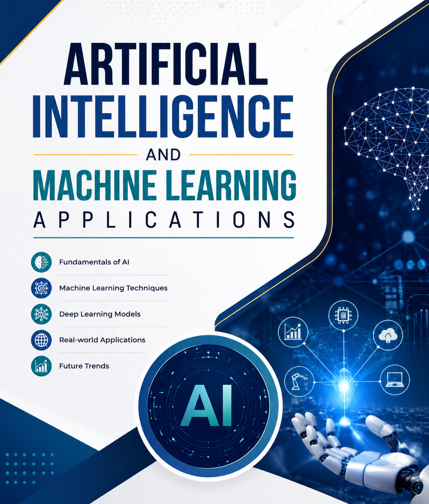


Speaker Opportunities : Oral Presentation, Poster Presentation, E-Poster
Renowned Speakers
KEY TOPICS
- Artificial Intelligence
- Machine Learning
- Deep Learning
- Neural Networks
- Generative AI
- Large Language Models
- LLM
- GPT
- Transformer
- Natural Language Processing
- NLP
- Computer Vision
- Reinforcement Learning
- Supervised Learning
- Unsupervised Learning
- Semi-Supervised Learning
- Self-Supervised Learning
- Transfer Learning
- Federated Learning
- Online Learning
- Classification
- Regression
- Clustering
- Dimensionality Reduction
- Feature Engineering
- Feature Selection
- Feature Extraction
- Data Mining
- Data Science
- Predictive Analytics
- Time Series Analysis
- Recommendation Systems
- Anomaly Detection
- Pattern Recognition
- Speech Recognition
- Speech Synthesis
- Sentiment Analysis
- Text Classification
- Named Entity Recognition
- Machine Translation
- Question Answering
- Chatbots
- Conversational AI
- Prompt Engineering
- Prompt Tuning
- Fine-Tuning
- Retrieval-Augmented Generation
- RAG
- Embeddings
- Vector Database
- Hierarchical Clustering
- PCA
- Semantic Search
- Knowledge Graph
- Tokenization
- Attention Mechanism
- Self-Attention
- Multi-Head Attention
- Encoder
- Decoder
- BERT
- RoBERTa
- T5
- LLaMA
- Mistral
- Gemini
- Claude
- Diffusion Models
- GAN
- Variational Autoencoder
- Autoencoder
- CNN
- Convolutional Neural Network
- RNN
- LSTM
- GRU
- Vision Transformer
- YOLO
- Object Detection
- Image Segmentation
- Image Classification
- Face Recognition
- OCR
- Pose Estimation
- Optical Flow
- Edge Detection
- OpenCV
- TensorFlow
- PyTorch
- Keras
- JAX
- Scikit-learn
- XGBoost
- LightGBM
- CatBoost
- NumPy
- Pandas
- Matplotlib
- Seaborn
- Hugging Face
- LangChain
- LlamaIndex
- t-SNE
- Support Vector Machine
- MLflow
- Weights & Biases
- Kubeflow
- Apache Spark
- Hadoop
- Airflow
- Docker
- Kubernetes
- MLOps
- DevOps
- Data Pipeline
- ETL
- Data Preprocessing
- Data Cleaning
- Data Augmentation
- Model Training
- Model Evaluation
- Model Deployment
- Model Monitoring
- Hyperparameter Tuning
- Cross Validation
- Grid Search
- Random Search
- Bayesian Optimization
- Early Stopping
- Regularization
- Dropout
- Batch Normalization
- Gradient Descent
- Stochastic Gradient Descent
- Adam Optimizer
- Loss Function
- Activation Function
- ReLU
- Sigmoid
- Softmax
- Precision
- Recall
- F1 Score
- Accuracy
- ROC Curve
- AUC
- Confusion Matrix
- Mean Squared Error
- Mean Absolute Error
- Cosine Similarity
- Euclidean Distance
- K-Means
- DBSCAN
- UMAP
- Decision Tree
- Random Forest

ABOUT US
Scientific Meditech is associated with vitalizing and refining the information about Science, Engineering, and Technology to break down the past, research display and plan another type of connected science in future.
For more details, please visit: Scientific Meditech
Enquiry
CONTACT US
61 Bridge Street Kington HR53DJ, UK
Phone: +44-7451202894
Email:
aimlcongress@gmail.com
inquiry@scientificmeditech.com
aimlconference2027@gmail.com